


Was sind die Arten von Dialysa toren?
-
 2021-12-01
-
LEPU


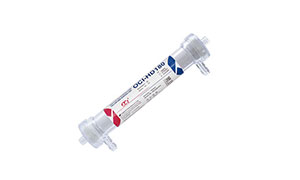
Der Dialysator besteht aus einer Dialyse membran und ihrer Stütz struktur, um die Niere zu ersetzen. Die Dialyse membran ist der Hauptteil des Dialysators, der das Blut vom Dialysat trennt. Während der Dialyse fließen Blut und Dialysat auf beiden Seiten der Membran in entgegen gesetzte Richtungen, und Wasser und gelöste Stoffe werden über die semipermeable Membran ausgetauscht. Die Leistung des Dialysators bestimmt die Wirkung der Dialyse behandlung und ist ein wichtiger Referenz faktor für die Entwicklung von Hämo dialyse programmen.
The characteristics of the Hämodialysator are composed of two parts: design characteristics and working characteristics. Design features include the configuration of the Dialysator, the pre-charge of the blood chamber and the dialysate chamber, the type of membrane, and the biocompatibility. Working characteristics include the transfer rate of different solutes and water. There are several classification methods for Dialysators.
. Klassifizierung nach der Konfiguration des Dialysators
Dialyzers are divided into tube type, flat type, and hollow fiber type. At present, the commonly used Dialysators are hollow fiber type, and the flat-type and tube-type Dialysators used in the early days have been basically eliminated.
The Hohl faser dialysator is composed of 8000-12000 hollow fibers, the fiber inner diameter is 200-300um, and the wall thickness is 2-30um. The hollow fibers are bundled into bundles and placed in the formed Dialysator casing, and the casing and the dialyzing membrane are sealed with polyurethane. The blood flows through the hollow fibers, and the dialysate flows in the opposite direction outside the fibers.
Ⅱ. Klassifizierung nach dem Membran material des Dialysators
Je nach Membran material können Dialysa toren in 4 Kategorien unterteilt werden:
1. Regenerated cellulose membrane Dialysator, including copper imitation membrane and copper ammonia membrane Dialysator. There are free hydroxyl groups on the surface of cellulose, which can react with blood components and has poor biocompatibility. After the Cupra treatment, the fiber surface is smoother and the biocompatibility is improved.
2. Acetate cellulose membrane Dialysator. The cellulose is acetylated before the film is formed, which improves the biocompatibility and performance of the film.
3. Replace the fiber membrane Dialysator. Blood imitation membrane is an alternative copper imitation membrane because its surface-free hydroxyl groups are covered by tertiary ammonia compounds, which have good biocompatibility.
4. Synthetic fiber membrane Dialysator. Materials for this Dialysator include polyacrylonitrile, polymethylmethacrylate, polysulfone, polycarbonate, polyethylene, and polyamide. They have a higher transport coefficient and ultrafiltration coefficient, better biocompatibility, but a higher price.
Ⅲ. Klassifizierung nach dem Ultra filtration koeffizienten des Dialysators
According to the ultrafiltration coefficient, there are two different Dialysierer typen:
1. Low ultrafiltration coefficient Dialysator. Ultrafiltration coefficient <15ml/(mmHg.h㎡), including copper imitation membrane, cuprammonium membrane, blood imitation membrane, and cellulose acetate membrane.
2. High-throughput and high-efficiency Dialysator. Ultrafiltration coefficient> 15 ml/(mmHg.h㎡), has a very high removal rate for medium molecular weight substances and can remove large molecular weight β2-microglobulin and other macromolecular substances. Typical high-efficiency Hämodialysators include polysulfone membrane series, PAN membrane, PMMA membrane, and cellulose acetate membrane Dialysator.
Sie könnten auch an folgenden Produkten interessiert sein:
Wenn Sie Fragen haben, können wir Ihnen helfen!