


Was sind die Arten von Ballon kathetern?
-
 2022-10-25
-
LEPU


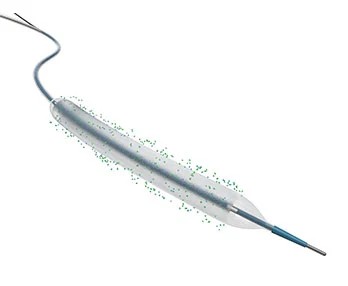
On January 16th, 1964, Dotter and Judkins performed the world's first lower limb vascular angioplasty on an elderly female patient using a balloon catheter. Thirteen years later, Gruentzig performed the world's first coronary angioplasty using a balloon catheter. Today, balloon dilation catheters are widely used for the diagnosis and treatment of cardiovascular diseases. Reviewing the development of balloon dilation catheter technology provides many insights for our current and future work. Next, let's take a look at the types of balloon catheters.
1. schnelle Austausch Ballon katheter
The rapid exchange balloon dilation catheter is currently the most widely used type of balloon dilation catheter in percutaneous coronary intervention (PCI). The catheter has a side hole 25cm from the tip of the balloon, through which the guide wire is inserted and emerges from the side hole when it is inserted through the top of the balloon. This design greatly facilitates the operation of the operator and saves time. The structure of the rapid exchange balloon is also different from other types of balloons in that it includes a connection segment between the balloon and the push rod, occasionally leading to rupture. Both the balloon and guide wire are operated by one person, resulting in an ideal imaging effect. The disadvantage of this type of balloon catheter is that if the entire balloon system is not removed, the guide wire cannot be replaced. If an extension guide wire is not used, the OTW balloon cannot be replaced, and the push force is slightly reduced, and the tracking is slightly worse.
2. Ballon katheter über dem Draht
The over-the-wire balloon dilation catheter (OTW) was first used in PTCA in 1982. It can be used for CTO lesions or when guide wire exchange is required, as well as for interventricular septal chemical ablation and central cavity pressure measurement and blood sampling. Currently, OTW balloons are rarely used clinically. The advantages of the OTW balloon dilation catheter include easy exchange of guide wires and good tracking. When the guide wire is difficult to pass through the occlusive lesion, the OTW balloon can provide additional support, similar to the role of a microcatheter. If the guide wire still cannot pass through the lesion, the OTW balloon dilation catheter can be used as a transmission catheter to exchange other guide wires. After the guide wire passes through the lesion, the OTW balloon dilation catheter can also be used for distal angiography to facilitate judging whether the guide wire is located in the true cavity. Therefore, the OTW balloon dilation catheter still has certain advantages in handling CTO lesions. The disadvantage of this type of balloon catheter is that the balloon size is slightly larger and the length of the steel wire is 300 cm, requiring cooperation between two operators.
3.Fixed Führungs draht Ballon katheter
Der Ballon dilatation katheter hat einen flexiblen Kunststoff führungs draht, der oben am Katheter befestigt ist und 2 cm lang ist. Unter den üblicher weise verwendeten Ballon dilatation kathetern hat es die kleinste äußere Form, was die Geschwindigkeit des Kreuzens der Läsion erhöht und zu einem idealen bildgebenden Effekt führt und nur eine Person benötigt, um sie zu bedienen. Wenn der Katheter jedoch in das Ziel blutgefäß eintritt, muss er beim Drehen in beide Richtungen nach vorne gedrückt werden, wodurch der Katheter zum Bruch neigt. Es kann sich nicht unabhängig bewegen und keine Führungs drähte austauschen. Es wird grunds ätzlich nicht mehr klinisch verwendet.
4. Arten von Perfusion ballon kathetern
Der Perfusion ballon dilatation katheter hat mehrere Seiten löcher an seinem proximalen und distalen Ende. Wenn der Ballon aufgeblasen ist, kann der Blutfluss immer noch in das erkrankte distale Ende gelangen.
Wenn der durchschnitt liche Aorten druck 80 mmHg beträgt, kann der distale Blutfluss immer noch 40-60 ml/min erreichen. Wenn ein kontinuierlicher Ballon druck erforderlich ist, um Komplikationen wie die Perforation der Koronar arterien zu behandeln, hat die Verwendung von Perfusion ballon dilatation kathetern bestimmte Vorteile. Der Haupt nachteil ist, dass der Katheter relativ dick ist und eine schlechte Fähigkeit hat, Läsionen zu kreuzen.
5. spezielle Arten von Ballon kathetern
Die speziellen Arten von Ballons, die derzeit in der klinischen Praxis verwendet werden, umfassen haupt sächlich Doppeldraht ballons, Schneid ballons, drogen freisetzende Ballons usw. Im Wesentlichen gehören diese drei Arten von Ballons zu Schnellaustausch-Ballon dilatation kathetern, haben jedoch spezielle Funktionen, die sich von herkömmlichen unterscheiden Schnellaustausch-Ballons.
Der Außen durchmesser des Doppel draht ballons ähnelt dem eines normalen Ballons, und am Ende des Ballons befindet sich ein inneres Lumen zum Führen der Draht form. Darüber hinaus befindet sich auf der Oberfläche des Ballons ein fester Draht, der sich an der Position von 180 ° auf beiden Seiten des Ballons vom Führungs draht befindet.
Der Doppel draht ballon kann Plaque gewebe regelmäßig schneiden, wobei das Endothel nur minimal beschädigt wird und sicher gestellt wird, dass sich der Ballon nicht verschiebt. Der Schneid ballon ist ein Produkt, das Mikros chneide technologie mit Ballon dilatation kombiniert. Die derzeit klinisch verwendeten Schneid ballons sind Produkte der dritten Generation, die eine bessere Passier barkeit aufweisen, eine vollständige Dilatation mit niedrigerem Druck erreichen können und niedrige Raten unregelmäßiger Reißungen der vaskulären Intima und niedrige Raten der erneuten Verengung auf lange Sicht aufweisen.
Der drogen eluie rende Ballon ist ein Produkt, das traditionelle Ballon dilatation stech no logie mit medikamenten freisetzen der Technologie kombiniert und allmählich seine Überlegenheit als wirksame Ergänzung zum Stent ing zeigt. Der medikamenten eluie rende Ballon kann Nebenwirkungen vermeiden, die durch Metalls tents und Polymer träger verursacht werden, und Arzneimittel auf bestimmte Bereiche der erkrankten Blutgefäß wand anwenden, um die Verengung zu kontrollieren.